/filters:quality(90)/fit-in/970x750/coros-web-faq/upload/images/2f50fff719c57773cad3392b497ac233.png)
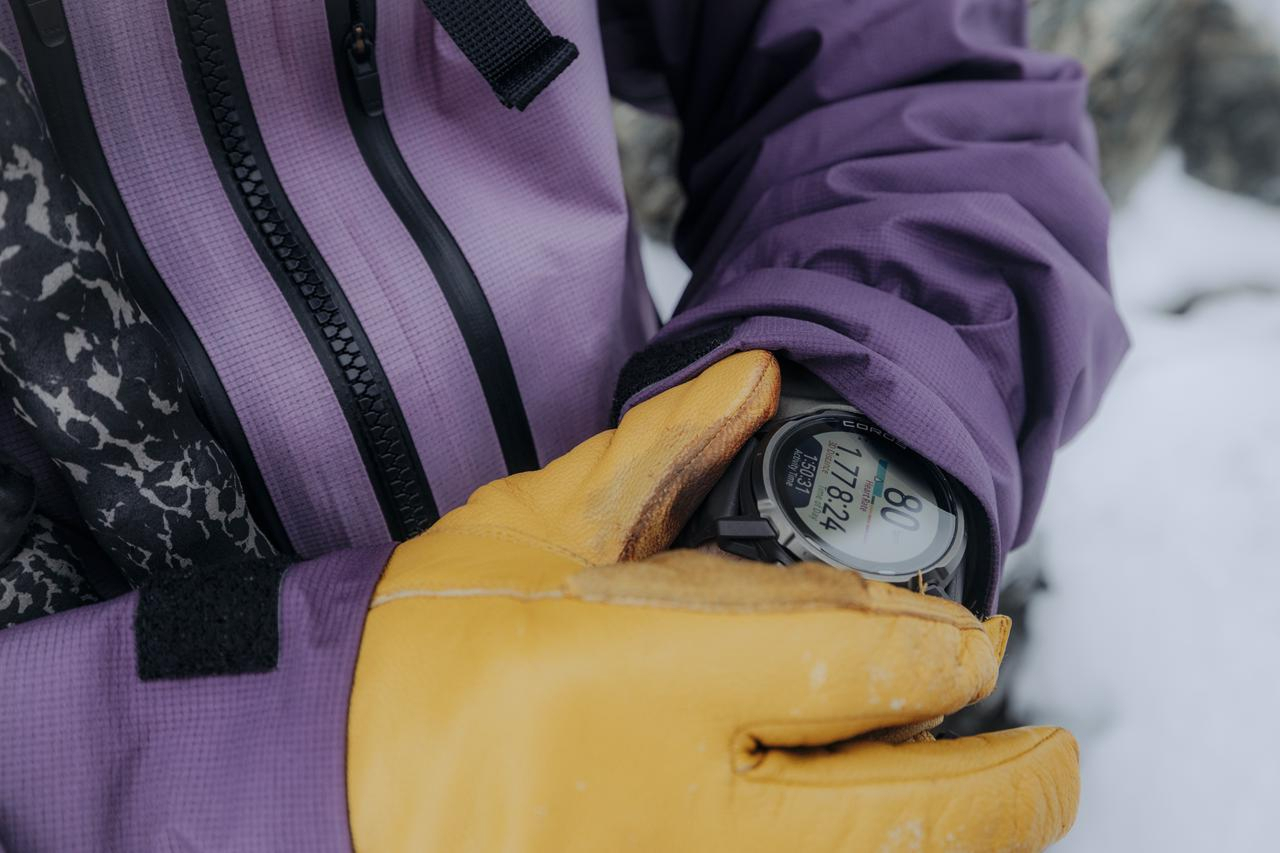
There’s something magical about a multi-pitch climb. The ground drops away, the wall stretches on, and the day unfolds in chapters, each belay ledge its own pause in the story. With COROS Outdoor Climb Mode, you can capture that whole adventure: the hike in, the vertical journey pitch by pitch, and the winding way back down.
COROS helps you preserve a living record of your climbs, and track your progress.
Finding the Right COROS Watch for Your Climbing Adventures
When you’re committing to a multi-pitch route, the last thing you want is to worry about your watch battery dying or your gear getting in the way. The COROS ecosystem really shines in this regard.
VERTIX 2S: This is the flagship climbing partner. With 118 hours of continuous GPS, it can handle the longest alpine days, even multi-day pushes, without recharging. The rugged sapphire glass and titanium build make it almost bombproof against the scrapes, bumps, and dirt that come with chimneys and offwidths. Most importantly, Outdoor Climb Mode is fully supported, so you can log every pitch without compromise.
COROS Vertix 2/2s Carabiner: Sometimes you don’t want a watch on your wrist, especially if you’re jamming hands, wearing gloves, or climbing in tight cracks. The COROS carabiner clip lets you snap your watch onto your harness or pack. You’ll still get GPS tracking and pitch logging, while keeping your wrists free for movement.
COROS Heart Rate Monitor: This is the perfect complement to the carabiner setup. Since the watch is off your wrist, the COROS Heart Rate Monitor ensures you still get accurate vitals throughout the day. Whether you’re pushing hard on the approach, managing pump mid-crux, or recovering on the belay ledge, your heart rate data is captured in real time and synced with your VERTIX 2S. Over time, this helps you understand how your body responds to the various grades you climb.
This trio makes for a seamless multi-pitch setup. You’ll have reliability, flexibility, and depth of data, all without compromising your movement on the wall.
Recording Your Climb: From Trailhead to Summit
Climbing is more than vertical moments on the wall, it’s the whole arc of the day. Outdoor Climb Mode honors that, dividing your adventure into Approach, Climb, and Descent phases so you can relive the full story afterward.
The Approach
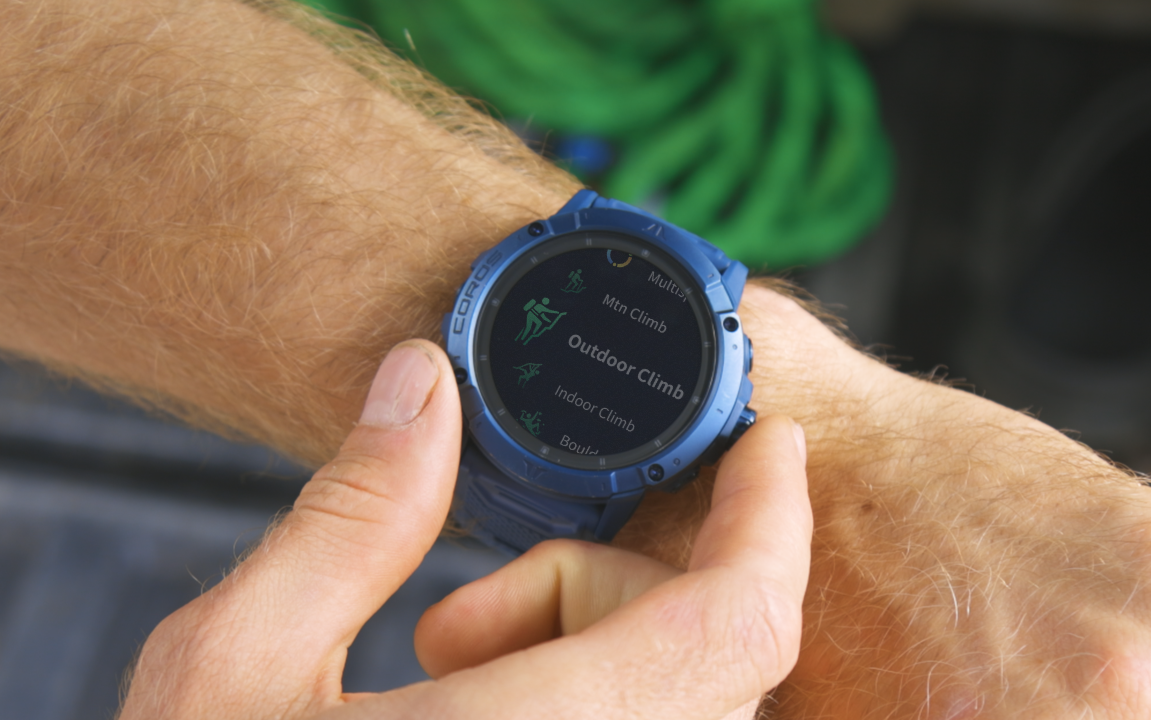
When you start an Outdoor Climb activity, your watch will automatically begin in Approach Mode.
On many multi-pitch days, the climb doesn’t start at the first bolt or the base of the crack. It begins miles earlier, at the trailhead. Approaches to climbing routes can be long, steep, and demanding, sometimes eating up more time and energy than the climb itself. With Outdoor Climb Mode, you can give this part of the journey the attention it deserves.
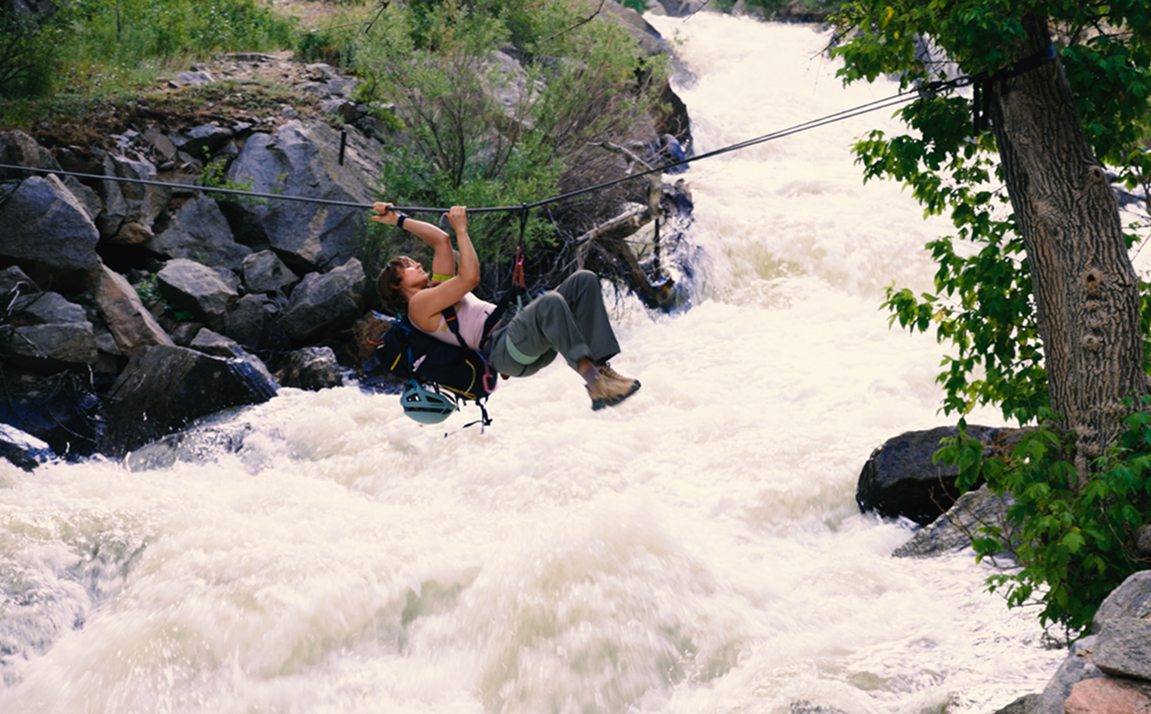
The watch’s GPS tracking keeps a precise record of your route to the base, while built-in maps and navigation tools help you stay on track through winding trails, scree fields, or alpine gullies. Along the way, you’ll see metrics like distance covered, hiking pace, and elevation gain, all of which paint a clearer picture of the effort required just to reach the wall.
Later, when you review your climb, you’ll see exactly how much energy the approach demanded. Was it a gentle stroll that left you fresh for the pitches, or a strenuous hike that set the tone for the day? Capturing this phase helps you understand your performance on the wall in the full context of the journey.
The Climb
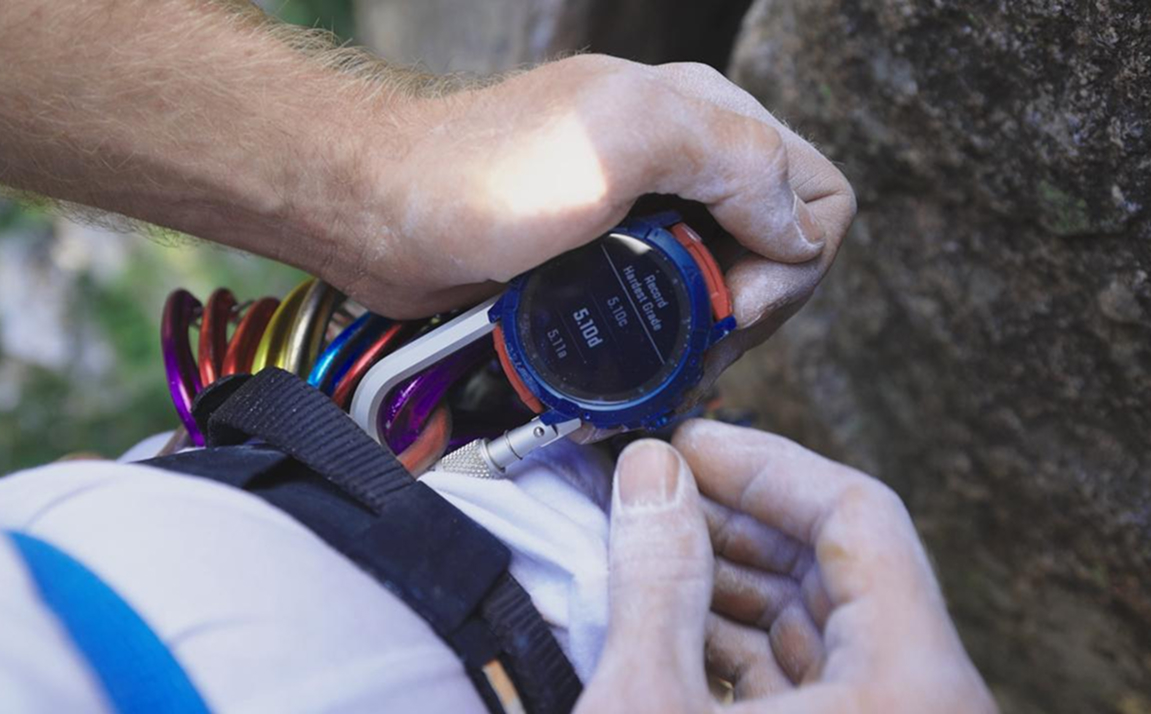
Once you’ve completed your approach and you’re ready to climb, hit the dial and select “Next Phase,” then choose “Climb.” This shifts your watch into the mode built for multi-pitch adventures, giving you the tools to track your ascent in the way that works best for you.
When it comes to logging pitches, climbers tend to prefer one of two methods:
1. Logging Each Pitch Individually
If you like to capture the full detail of your climb, use the Lap button at the end of every pitch. Each time you press it, your watch will ask two quick questions:
- How many pitches have you climbed since your last lap?
- What grade was that pitch?
This lets you create a precise pitch-by-pitch breakdown: the time it took your party to climb each section, the elevation gained, and the difficulty of each pitch. Later, when you review your climb in the COROS app, you’ll be able to see the story of your route unfold pitch by pitch — perfect for tracking progress and reflecting on where you thrived or struggled.
2. Logging at the End of the Climb
If you prefer to stay completely focused on the rock and not think about buttons mid-pitch, there’s a simpler option: log everything at the end. Just keep the watch in Climb mode for the entire ascent, and once you’ve topped out, press the crown. You’ll then be able to enter the total number of pitches climbed and the hardest grade you sent.
This approach gives you a clean summary of the route without interrupting your flow, while still capturing the overall effort of the climb.
The Descent
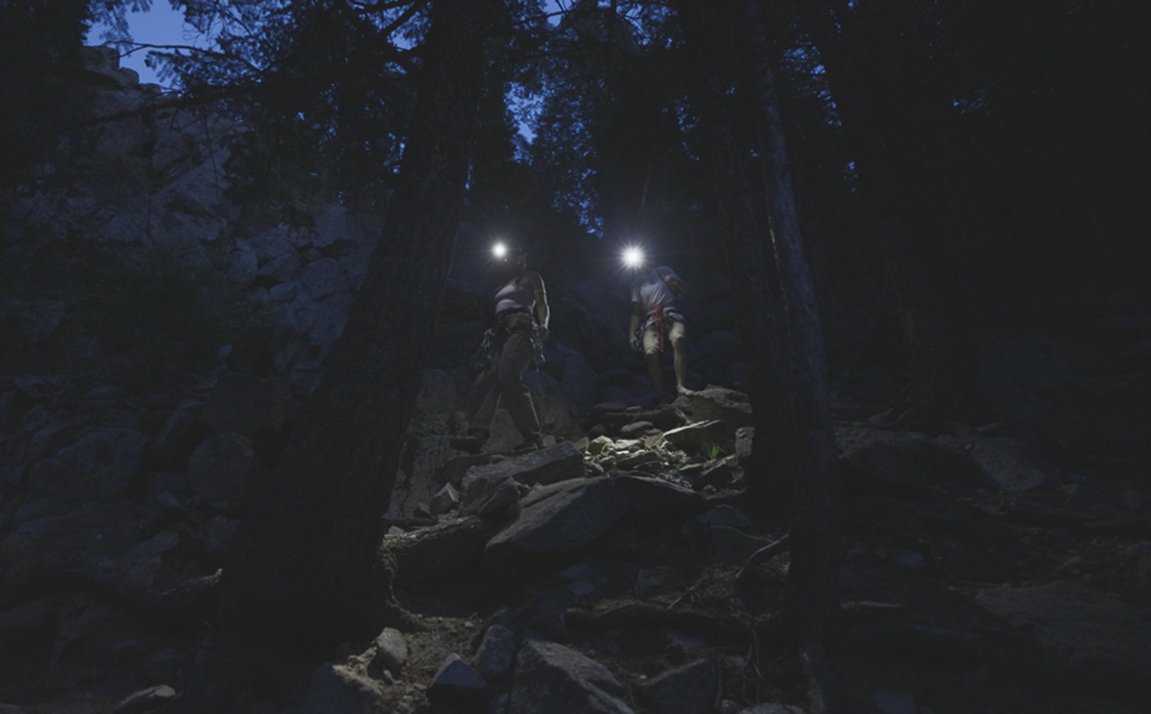
After topping out, take a breath, soak in the view, and then hit the dial, select “Next Phase,” and switch to “Descent.”This last phase gives the walk-off or rappel the same attention as the approach and climb, rounding out the full journey of your multi-pitch day.
Just like on the way in, the descent can be just as challenging — whether you’re rappelling multiple pitches, hiking down steep scree, or navigating a long trail back to the car. By keeping the watch in Descent mode, you’ll capture metrics like distance, elevation loss, and pace, showing how your body performed when fatigue had already set in.
One of the most useful features here is the navigation breadcrumb trail. The watch records the path you took on the approach, and during the descent you can use that breadcrumb trail to retrace your steps. It’s an invaluable tool when trails are faint, daylight is fading, or you’re navigating complex alpine terrain.
When you review the activity later, you’ll have a complete record of how the day unfolded: from the hike in, to every pitch you climbed, to the careful journey back down.
Looking Back: Turning Data Into Progress
One of the most rewarding parts of using Outdoor Climb Mode comes after the ropes are coiled and the gear is packed away. Sync your watch with the COROS app, and you’ll unlock a wealth of insights that help you understand not just what you climbed, but how your body responded to the entire day.
Here’s how to make the most of it:
See the Full Story
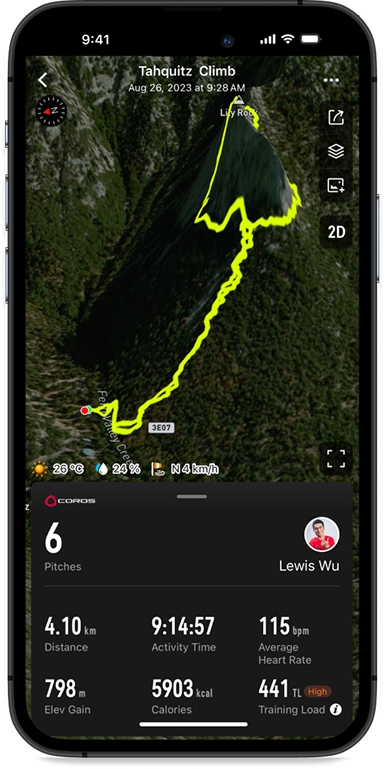
Your climb is broken down into Approach, Climb, and Descent, giving you a complete picture of the day. Instead of just a total time, you’ll know how long it took to hike in, how your pace changed on each pitch, and how your energy held up on the way down.
Evaluate Effort and Exertion
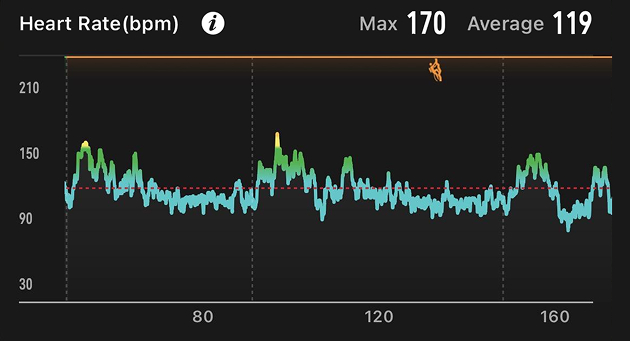
Heart rate data (especially if you paired with the COROS Heart Rate Monitor) shows where your body was working hardest. Compare effort levels between the approach, the crux pitches, and the descent. Did your heart rate spike during a steep hike in? Did it settle into a steady rhythm during easier pitches? These insights reveal where your energy is being spent.
Training Load
Every climb contributes to your broader fitness journey. COROS calculates the training load of your session, giving you a sense of how demanding the day was on your body compared to your recent training. Over time, you’ll see whether your climbing days are building endurance, pushing your limits, or tipping toward overtraining.
Recovery Time
After a big multi-pitch day, it’s tempting to jump right back into training — but recovery is where growth actually happens. COROS provides a recommended recovery window based on the intensity of your climb. Respecting this guidance helps you return to the rock fresher, stronger, and with less risk of injury.
Learn from Patterns
The more climbs you log, the more powerful the insights become. Maybe you notice you’re always strong through the first five pitches but fade on longer routes. Or perhaps steep, high-gain approaches consistently drain your reserves before you even tie in. Recognizing these trends allows you to train smarter, whether that means building uphill hiking strength, dialing in pacing, or targeting endurance on longer routes.
Relive and Share Your Climb with a 3D Flyover
One of the most exciting ways to celebrate a multi-pitch day is by turning your data into something visual. In the COROS app, every Outdoor Climb activity can be transformed into a 3D flyover, a dynamic replay that traces your approach, climb, and descent across the terrain.
Imagine showing your friends not just a photo from the belay ledge, but the full arc of your day: the steep hike in, the vertical line of your pitches, and the winding way back down. The flyover brings your climb to life in a way that’s both inspiring and easy to share.
Share the flyover video directly to Instagram, TikTok, or Facebook to highlight your adventure. It’s a great way to tell the story of your climb visually.
The 3D flyover is the perfect bridge between the raw data of your climb and the emotional experience of it. It’s a way to celebrate the journey, inspire others, and remind yourself of just how far you’ve gone — both literally and figuratively
COROS Outdoor Climb Mode is designed to enhance your experience on the wall. By capturing the details, it frees you to stay present in the moment, knowing your watch is quietly recording the story for later.