/filters:quality(90)/fit-in/970x750/coros-web-faq/upload/images/69fcd7c43c786b7fe4fe36f59e12d590.png)
Molly Seidel knows what it's like to empty the tank. She has raced on road running's biggest stages to great success. She understands the grind of training months and years for a single event. But at the Black Canyon 100K, she discovered a different kind of effort.
“That is probably the hardest I’ve worked in a race, maybe ever.”
Coming from an Olympic marathoner, that tells you something about what ultra racing actually demands.
In a marathon, you are riding the edge of aerobic capacity, but the finish is never that far away. In a 100K, the discomfort lingers. It compounds with every small mistake.
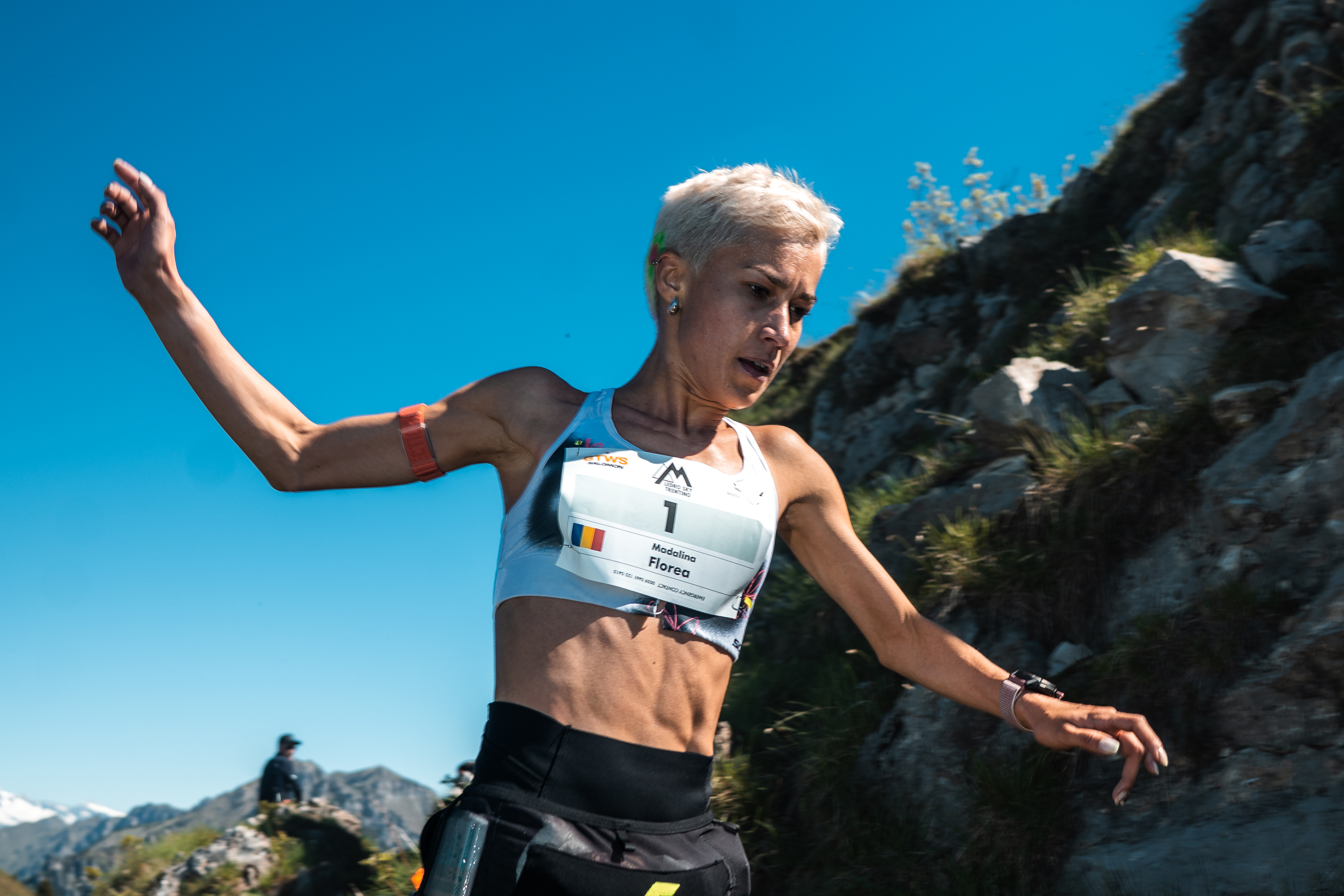
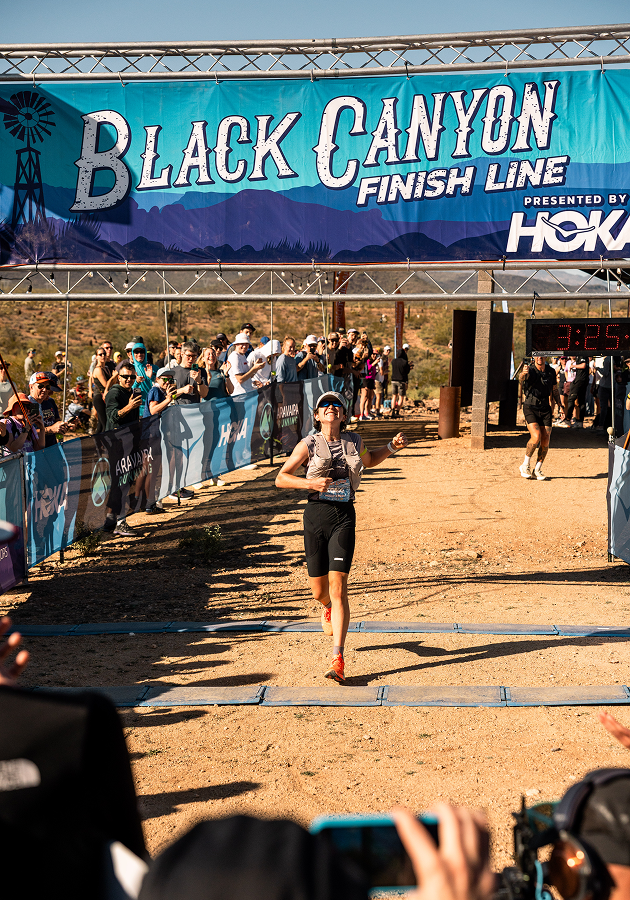
Molly placed fourth at Black Canyon and secured a Golden Ticket to Western States. The result is only part of the story. Look closer and you'll see how she learned in real time what ultrarunning demands.
From Pace to Effort
Most of Molly's career has been built on pace. Marathon training is pace-specific and any adjustments from hills or weather are small. Effort matters, but it is expressed through pace.
Trail racing disrupts that framework.
Climbs slow you. Descents spike muscular load. Terrain changes stride mechanics. Pace, for all practical purposes, goes out the window. That shift forced Molly to change how she trains, adding heart rate to the mix.
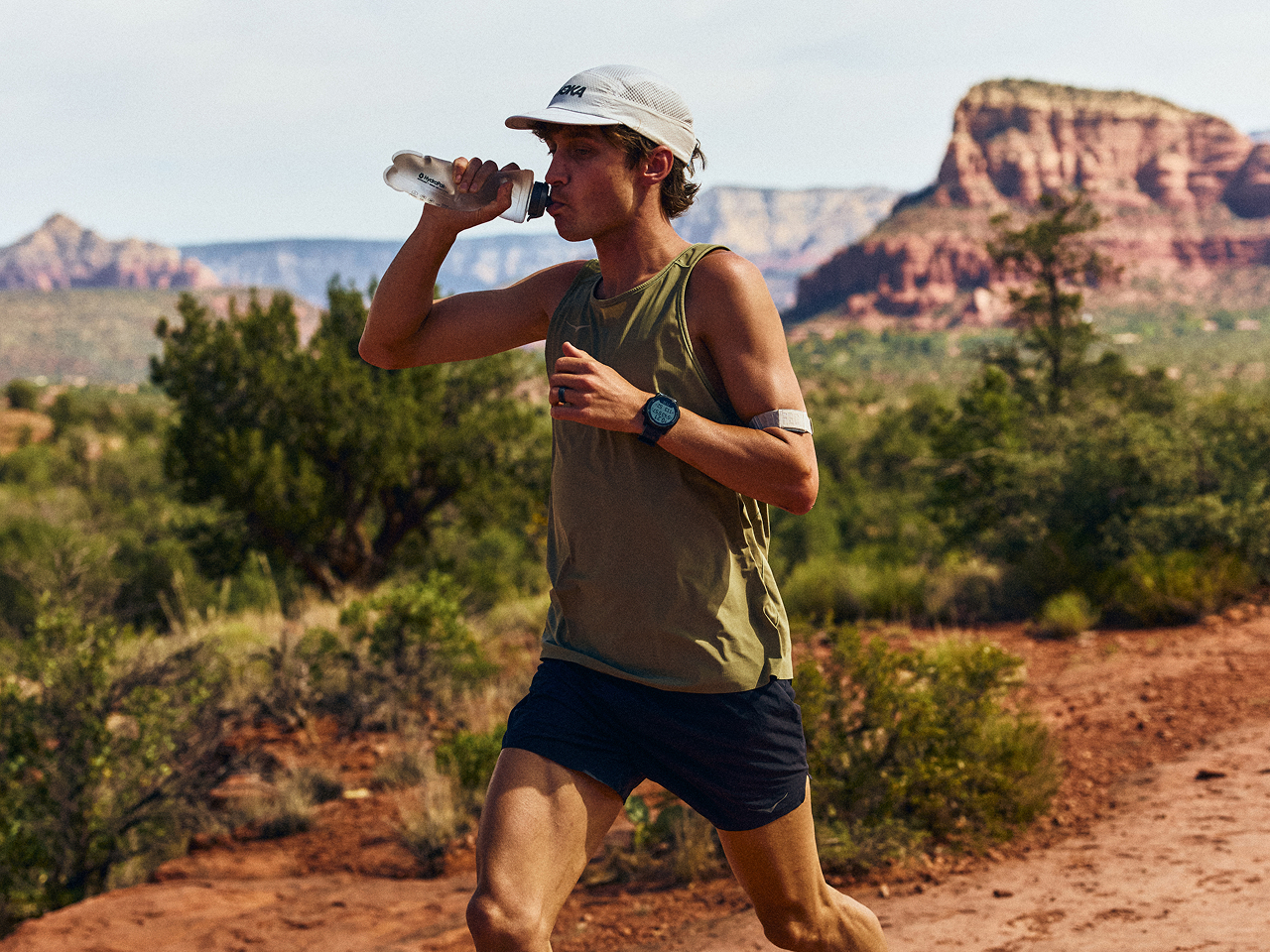
“It’s a major part of my training in ultra just because pace is kind of meaningless on a lot of these courses. It is about your effort level, so being able to use the heart rate strap and get really accurate heart rate data, I think is pretty critical for me.”
When terrain fluctuates, heart rate and Effort Pace give you a clearer picture of the physiological cost of what you are doing. A steady output early in a 100K preserves durability later. Overcooking the first 25 miles creates exponential cost.
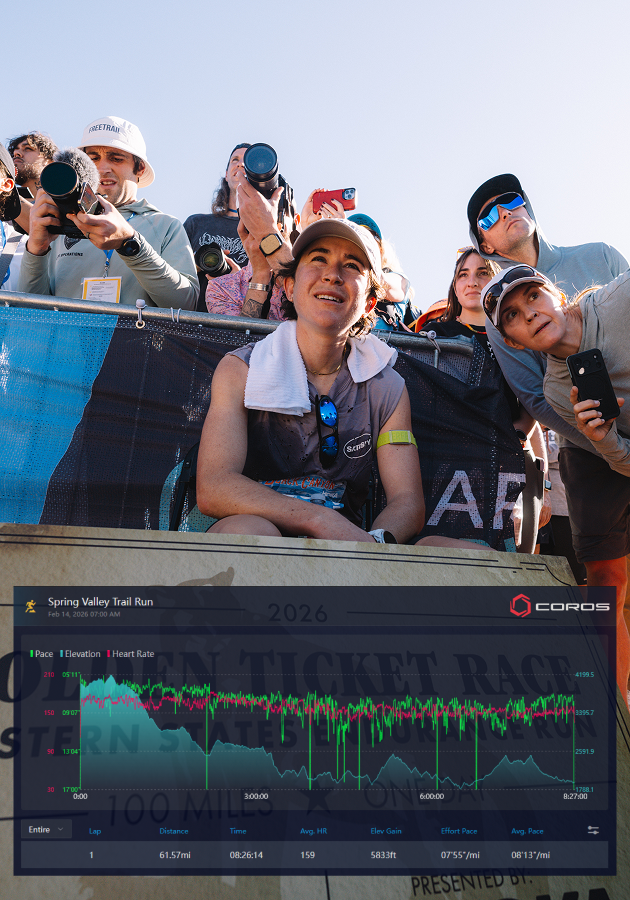
Black Canyon is mostly downhill early, essentially forcing a quick pace if you want to stay in the lead pack. This creates more risk for a blowup later on, but was necessary if she wanted to go after a Golden Ticket.
Molly admitted that descending was her biggest weakness. She is still developing her legs for fast downhill running. The climbs, however, became her anchor. When the course tilted upward late, she regained confidence. She knew uphill running was a strength and used it as a mental reset.
For athletes transitioning from road to trail, this is a key lesson. Aerobic fitness transfers. Muscular durability does not. Base Fitness must support not only cardiovascular demand, but also eccentric load from vertical terrain, both up and down.
Along with the switch from pace to heart rate, Molly has also expanded her COROS toolbox to utilize more features.
"I think it's just as I have evolved as an athlete, I feel like I've been able to take advantage of the features more and more and that like I've grown with the product. A feature that I never used as a marathon athlete, but I use all the time now is the Maps feature and the breadcrumb navigation."
In trail racing, navigation is not a luxury. A wrong turn could have meant losing the Golden Ticket. Additionally, navigation reduces cognitive load. When fatigue builds, small decisions cost energy. Offloading those to the watch helps preserve focus.
"It's really nice when it tells you ahead of time like, hey, there's going to be a hard right turn coming up." Molly said. "It just gives you that extra level of awareness of your surroundings, which is really helpful."
Not Afraid to Make Mistakes
Roughly a third of the way through the race, Molly left an aid station without refilling on water. The consequence seemed trivial, but Molly hadn't yet learned the value of keeping stocked up. She ran out shortly after, and had to survive the next 8 miles to the next aid station.
In a marathon, you can survive small fueling mistakes. The race is short enough that the damage can be managed. Not in an ultra.
"The fueling mistakes take a huge toll in ultra. And that's something that I'm not used to," Molly said. "There's more consequences and you have to live with those consequences for a lot longer."
She described being in a deep mental hole for over 20 miles through the crux of the race. The early pacing combined with hydration errors created a long stretch of doubt. Lesson learned: your logistics must be just as ready as your body.
Later in the race, her coach insisted she carry a handheld bottle despite her resistance. She did not want it. She drank it anyway. It helped.
"I'm not experienced to know that that's what I need. And it's just being willing to know that I'm going to make mistakes and learn from them."
Experience shortens the feedback loop between mistake and correction. Molly is early in that learning curve. She will make fewer of those errors at Western States.
The Mental Load of 100K
Molly described spending hours in a place she had never experienced in a marathon. Before, her deepest suffering lasted minutes. In a 100K, it can last hours.
Black Canyon has 3 "Golden Tickets" which provide entry into the Western States 100. When she was passed and slipped out of podium contention, Molly admitted it was a low moment. Then, her coach came through with the best news of the day: Tara Dower, sitting just ahead of her, had already secured a ticket. If Molly held her position, she'd clench hers.
"I felt like I was being chased like the whole last 30 miles of that race. So that was in my head the entire time. And I think it really helped me, knowing the goal of today has always been get that golden ticket. It's not in your wheelhouse to go after the podium spots right now, but you are still racing."
This stretch of the race was another learning point for Molly. The other top women all had pacers, but she did not. As luck would have it, she came up behind Craig Hunt, a pacer from her Marathon days, who generously paced her for a critical 15 miles.
"I honestly think he saved my race, because I had really discounted how much a pacer can help in a race like that."
Having someone to guide effort, manage pace on climbs, and keep her mentally engaged likely preserved her position.
Rebuilding, Recalibrating, and Looking Ahead
This was not a perfect build. A year ago, Molly was not training consistently. She spent much of 2025 rebuilding mileage and capacity. Workouts did not start until the fall. She had to dial back at times. Travel and winter weather added even more challenges.
"Over the last 2 years, there was a lot of uncertainty about this. This was a huge risk with my career, and it wasn't guaranteed that this was going to work out."
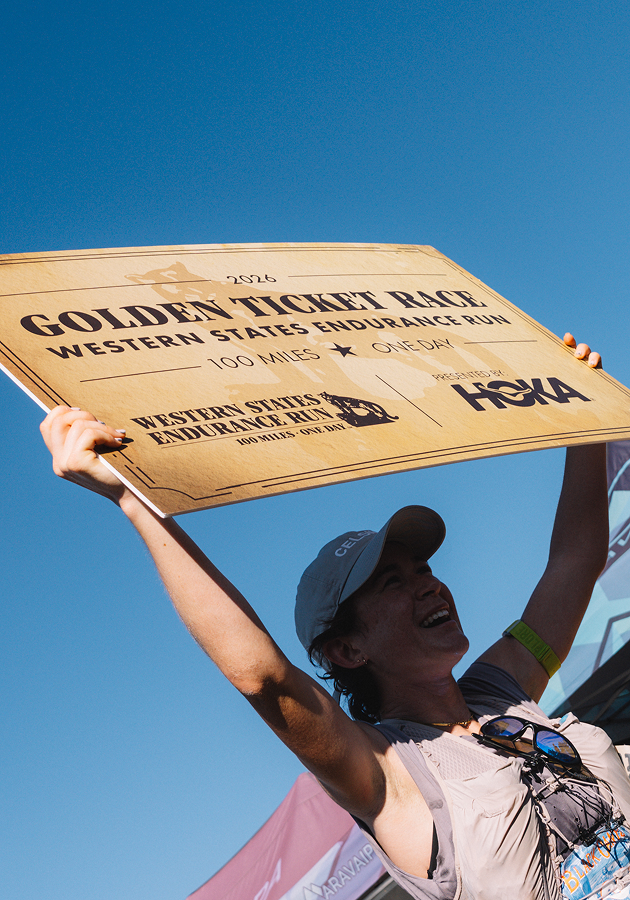
Western States now sits ahead of her. In trail running, that race carries historical weight comparable to the Olympics on the road. It is recognized as the oldest 100 mile race in the world. For Molly, earning entry to such a prestigious trail race solidifies her commitment to a new direction. It begins the next chapter of her career.
"To switch from the marathon to the trail is not an easy thing. This is a huge challenge for me, and that's why I like doing it. I like to try and push my limits and see what I can do. It's really fun to explore some of those limits by doing something that is one of the hardest things I've ever done, and hard in a different way than I've ever experienced."
Molly is not approaching it as a finished product. She left Black Canyon with more respect for the event than she had going in.
That is the point.
This is the beginning of a career path, not a one-time experiment. Now the work becomes more specific. The downhills will get stronger. The fueling will get sharper.
"I have so much in training that I still need to do, but hey, you can go from zero to golden ticket in a year. If we can get in another year of consistent training, who knows what's possible?"