/filters:quality(90)/fit-in/970x750/coros-web-faq/upload/images/2078ba98ec4b18e5359d3cb25d403952.jpg)
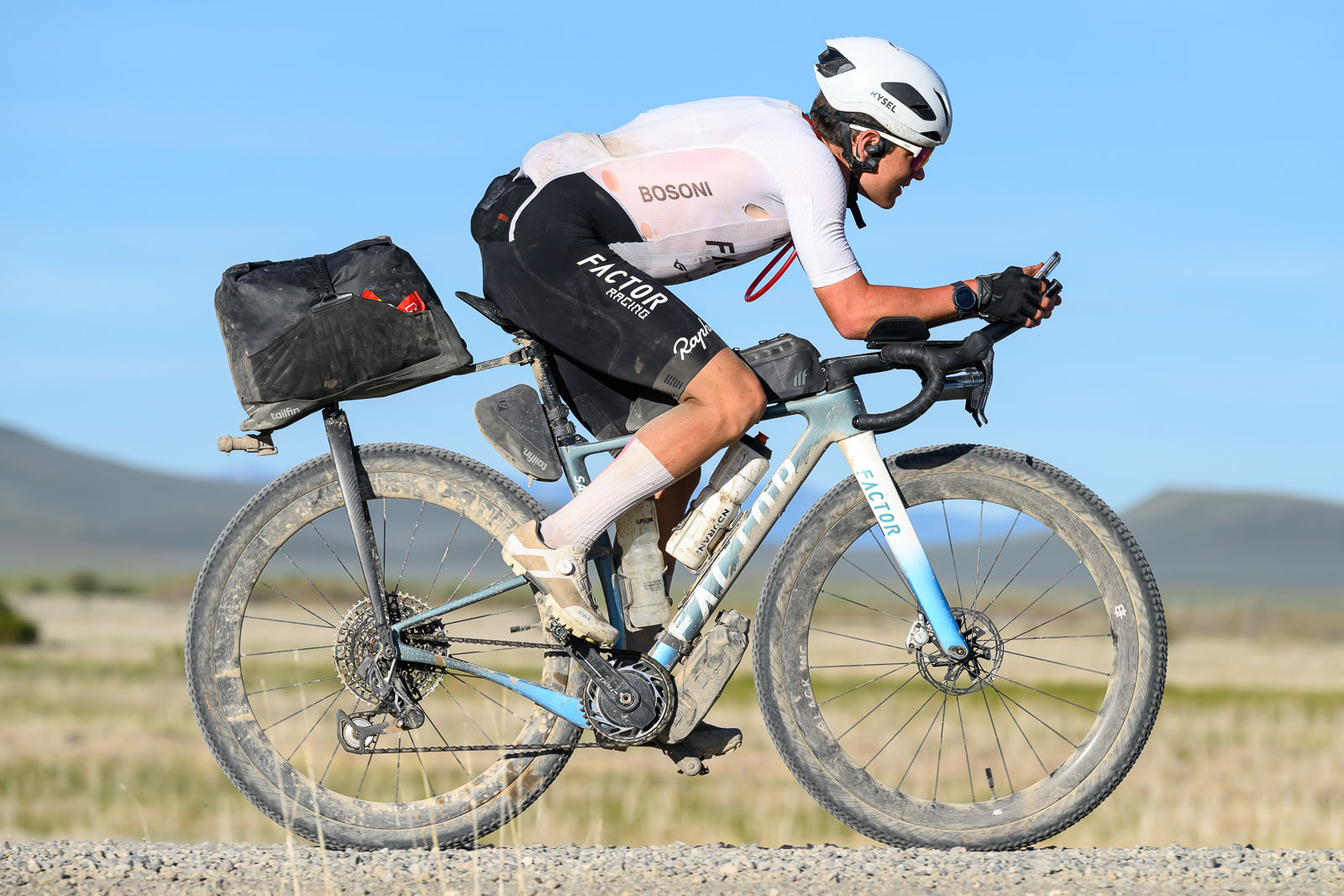
Sam Shaw is on a mission to rewrite the record books in New Zealand. His most recent milestone was the New Zealand Great Trails FKT. It connects three of New Zealand's most iconic trails, covering 390 kilometers and 7500 meters of climbing.
The former enduro rider looked at the previous record and saw opportunity. "Payson McElveen had come over to New Zealand and set that route in 2024," Shaw said. "Seeing his one — and then it's actually a really good route — that was kind of the inspiration behind doing it." On April 30th, Shaw completed the 390km traverse of New Zealand's West Coast — from Greymouth to Kahurangi National Park via Paparoa, Old Ghost Road, and the Heaphy Track — in 21 hours, 39 minutes, and 14 seconds. That's roughly 2 hours faster than McElveen's mark.
He did it fully self-supported, in the rain, riding through 13 hours of darkness, one week removed from being sick. The data tells the story of exactly how.
The Route
The New Zealand Great Trails ride is not a single trail. It is a West Coast traverse linking three of New Zealand's premier backcountry tracks — Paparoa, Old Ghost Road, and the Heaphy — with roughly 190 kilometers of road connecting them. In total: 200 kilometers of technical singletrack, 190 kilometers of road, and 7,500 meters of elevation gain.
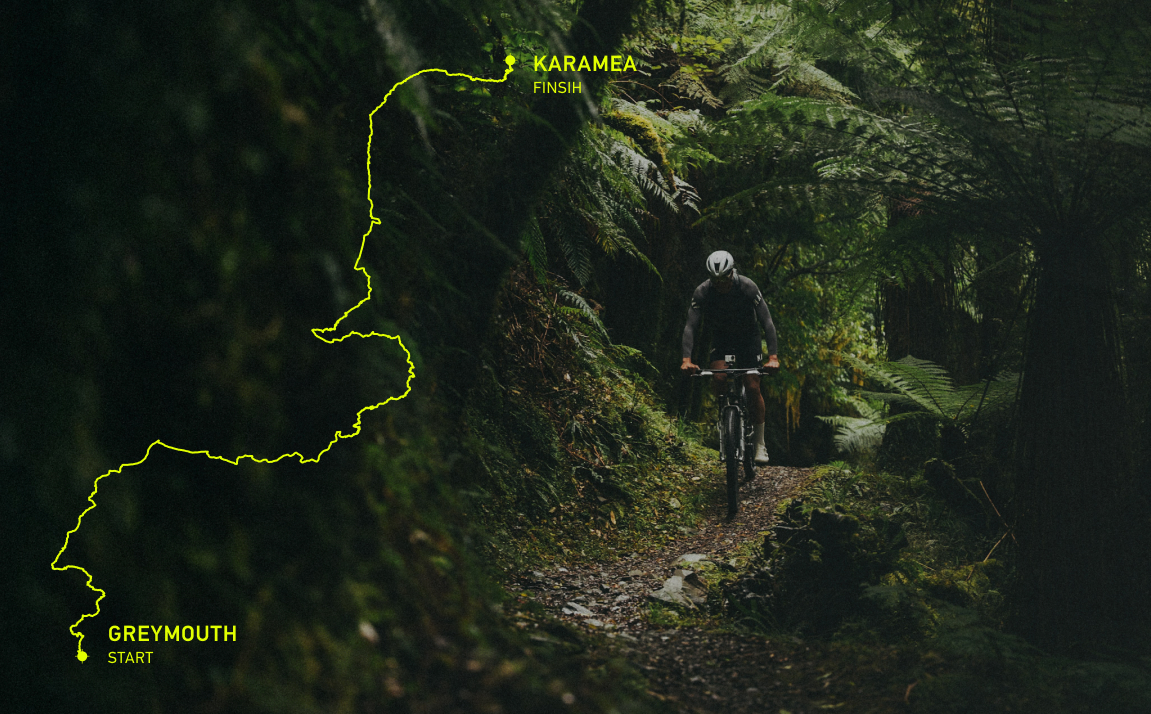
Each trail carries its own character. Paparoa is a newer track cutting through limestone karst country on the northern West Coast. Old Ghost Road is the most demanding of the three, with 85 kilometers of remote, high-alpine singletrack and no easy exit. The Heaphy is New Zealand's longest Great Walk, traversing the Kahurangi National Park from the Lewis Pass ranges to the Tasman Sea. It also carries a unique constraint: the Heaphy only opens to cyclists on May 1st, closing again on November 30th. These are the winter and spring months, where daylight is a commodoty and weather isn't always cooperative. Shaw's attempt was timed to coincide with opening day.
Getting three trails with a combined trail distance of 200km done in under 22 hours requires a huge amount of fitness and some careful planning.
The Logistical Constraint
Special rules govern when cyclists can ride both Paparoa and Heaphy, the first and third trails, respectively. "You can only ride Paparoa and Heaphy in the daytime due to conservation efforts," Shaw explained. That single constraint dictated his entire pacing strategy before he ever turned a pedal.
To arrive at the Heaphy at first light on May 1st, Shaw needed to time his start on Paparoa precisely. Too early and he'd be left waiting at the Heaphy trailhead in the dark. Too late and he'd burn daylight on the road sections he could ride at any hour. "So I was trying to push out Paparoa as late as possible, which ended up being 3 o'clock."
This meant riding the first trail fast to stay within the rules and keep the overall schedule intact. Across 52.25 kilometers of technical singletrack, Shaw averaged 234 watts with a Normalized Power of 298 watts. For an effort that will last 21 hours, that is an aggressive opening. It was also the only rational choice.
Paparoa
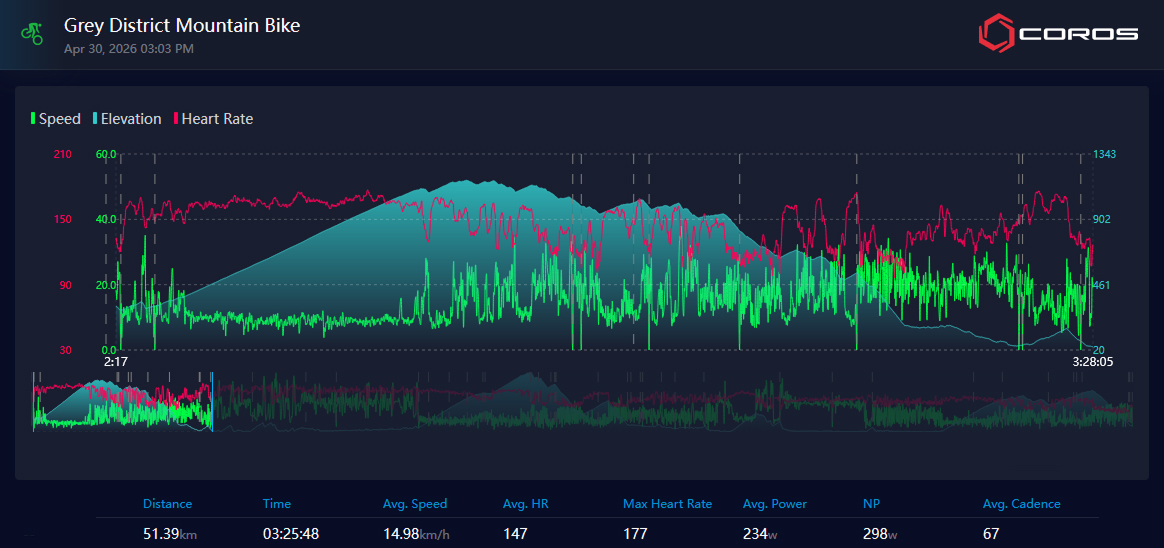
Shaw rolled onto Paparoa at 3PM with rain already falling. The wet conditions would dog him for the next four hours and were immediately destructive. Shortly after dusk, a rock had cracked the water seal on one of his lights (a consequence of his choice of battery pack placement) and it flickered out before he'd even reached Old Ghost Road. It came back to life after drying back out. Sam kept moving.
The Paparoa section demands technical precision. Limestone features, rooted climbs, and exposed ridgelines don't reward brute force. Shaw's 298w NP reflects the stop-start nature of the terrain. His average heart rate of 147 bpm placed him in a controlled but committed zone, high enough to be building time on record pace, measured enough to preserve something for the 18 hours still ahead.
He cleared Paparoa in 3 hours, 26 minutes.
Road 1: Paparoa to Old Ghost Road
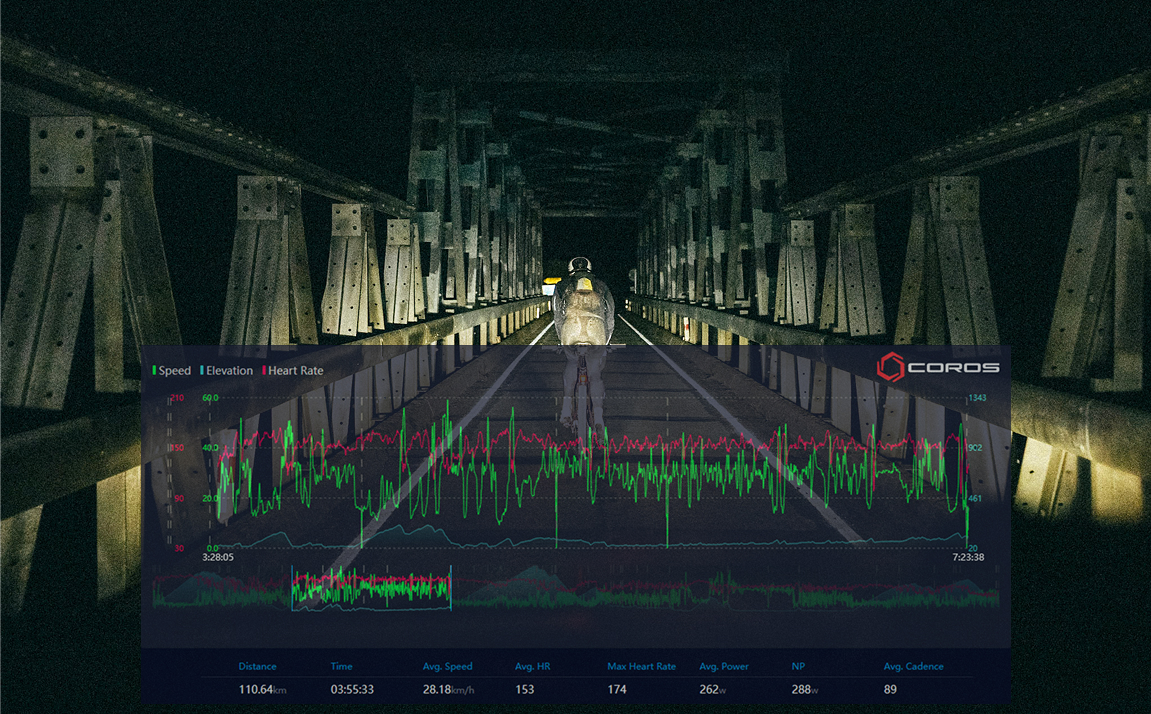
The road section between Paparoa and Old Ghost Road is where Shaw put the most significant time into McElveen's record. He covered the 110-kilometer section at speeds of 28 km/h, and his highest average power of the entire attempt at 263 watts. His heart rate ticked up to 153 — a natural response to moving faster on more predictable terrain early in an effort.
The NP of 288 watts on road, nearly matching his trail NP from Paparoa, signals smooth, sustained output with limited coasting. Shaw was racing, not transitioning.
He arrived at the Old Ghost Road trailhead just before 11 PM.
Old Ghost Road
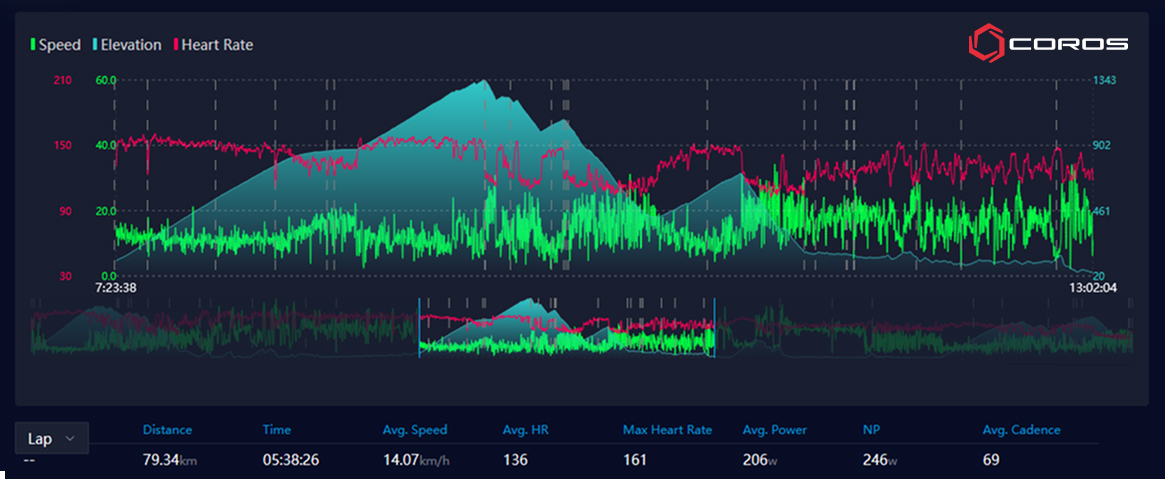
Old Ghost Road is the hardest trail on the route. It is also the one Shaw rode entirely in the dark, from 11 PM to approximately 5 AM, on a backup light, having already banked over seven hours of hard effort. "I was in absolute dark for 13 hours of that ride," Shaw said.
The power numbers tell the story of a rider who had done this math in advance. Average power dropped to 197 watts (a 37-watt reduction from Trail 1) and his heart rate settled at 135 bpm. This was a calculated decision. On a remote alpine trail in the dark, where a crash or mechanical could end the attempt entirely, controlled output over 79 kilometers is the correct call.
What stands out is the NP of 245 watts. Despite the darkness, despite the terrain, despite the hour, Shaw was still riding with purpose. The gap between his 197w average and 245w NP reflects the technical demands of the trail.
He saw a kiwi somewhere along the trail; fitting for New Zealand. It did not slow him down.
COROS Note: With 120 hours of battery life, the COROS DURA was never a concern across the 21-hour attempt. Shaw's backup light failed in the rain. His head unit didn't.
Road 2: Old Ghost Road to Heaphy
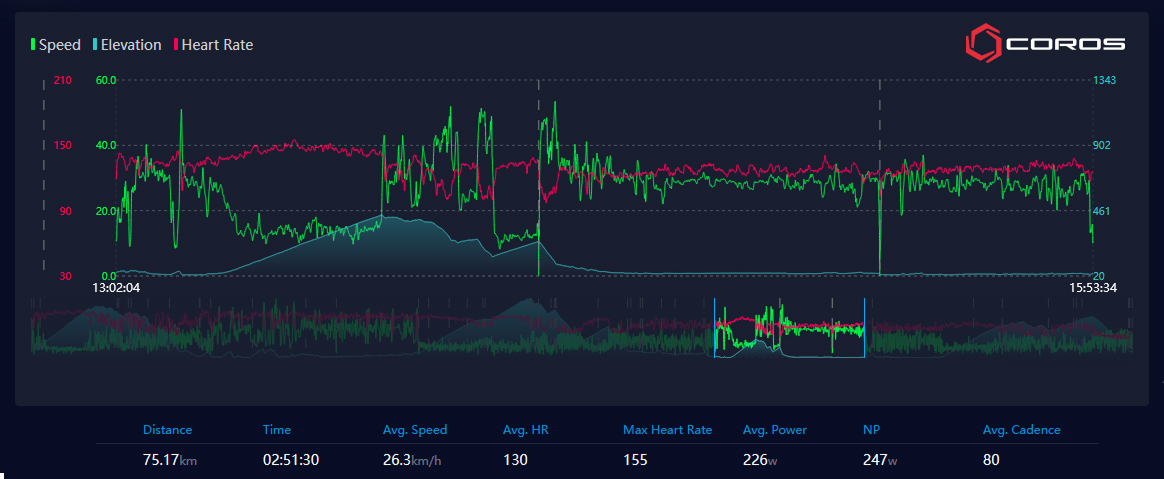
Finishing up his 13 hours in the dark, Shaw was back on pavement, covering 75 kilometers at 26.32 km/h. His heart rate had dropped to 130, and his average power sat at 225 watts.
For many athletes at this point in a 20-hour effort, this is where the wheels come off. Shaw's numbers suggest the opposite: a rider who had paced honestly enough that the second road section, 16 hours in, still looked like a controlled effort. The NP of 247 watts, nearly matching Road 1's 288-watt NP in relative terms given the fatigue state, reflects that the engine was still turning over cleanly.
He rolled into the Heaphy trailhead as dawn broke and the track opened for the season. He was the first one in.
Heaphy
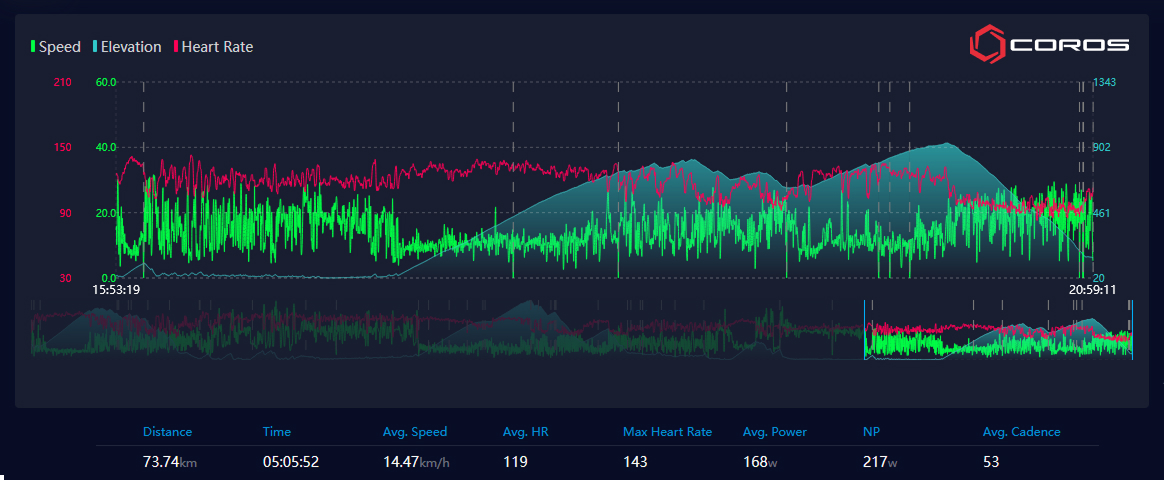
On the final trail, Sam's heart rate and power were the lowest of any section. His speed stayed comparable with the other trails, though; and after such a powerful start, only a DNF or a total shutdown could derail his shot at victory. Sam's final trek crossed 73 kilometers of winding trail from alpine tussock down through podocarp forest to a black sand coast on the Tasman Sea.
The Heaphy is not an easy trail. The fact that Shaw's HR had dropped 28 beats from his Trail 1 average while still maintaining forward momentum at 14.5km/hr is a testament to how honestly he'd ridden the first 18 hours.
He crossed the finish in 21:39:14.
What the Numbers Say
Pull back and look at Sam's heart rate arc across all five segments: 147 → 153 → 135 → 130 → 119. That is a textbook descending drift on a multi-stage effort — the signature of pacing discipline, not survival. Most athletes in a record attempt will show the opposite: HR climbing through the back half as fatigue drives cardiac cost upward. Shaw's declined at every segment.
The power arc tells the same stor: 234w → 263w → 197w → 225w → 168w. He started hard because the route demanded it, held strong on the first road section where speed was available, then stepped down deliberately through the night and into the final trail, aligning with the compounding drain he was putting his body through. Nothing was left on the table. Nothing was burned prematurely.
Shaw has been open about the fact that this wasn't peak fitness. He'd been sick in the days before the attempt, arrived at the start line still shaking off the tail end of a cold, and was riding into one of the shortest daylight windows of the year. A headwind on the road sections and the opening rainstorm weren't exactly on his wish-list, either. None of it changed the outcome.
Shaw had been monitoring his effort closely throughout. "I was actually using my DURA pretty specifically to monitor my power," he said. "Because it's such a long effort, any power spikes or anything stupid like that — it's extremely important." The descending HR and power arcs across all five segments are proof that the approach worked.
Records are the Starting Point
Shaw has been clear: the New Zealand Great Trails FKT was never the destination. It's one entry in a progression of increasingly ambitious self-supported efforts that he's been stacking.
"It's definitely a stepping stone," Shaw said. "Towards the Length of New Zealand one I've been talking about, which is like 2,100 K's — which is ginormous in comparison."
The 21:39:14 puts a number on what's possible when route strategy, equipment reliability, and pacing discipline align. It also sets a new benchmark for the next rider who looks at Sam Shaw's new record and gets inspired to push their limits.