/filters:quality(90)/fit-in/970x750/coros-web-faq/upload/images/89efbd7f94a6571d9bef765217b9863e.png)
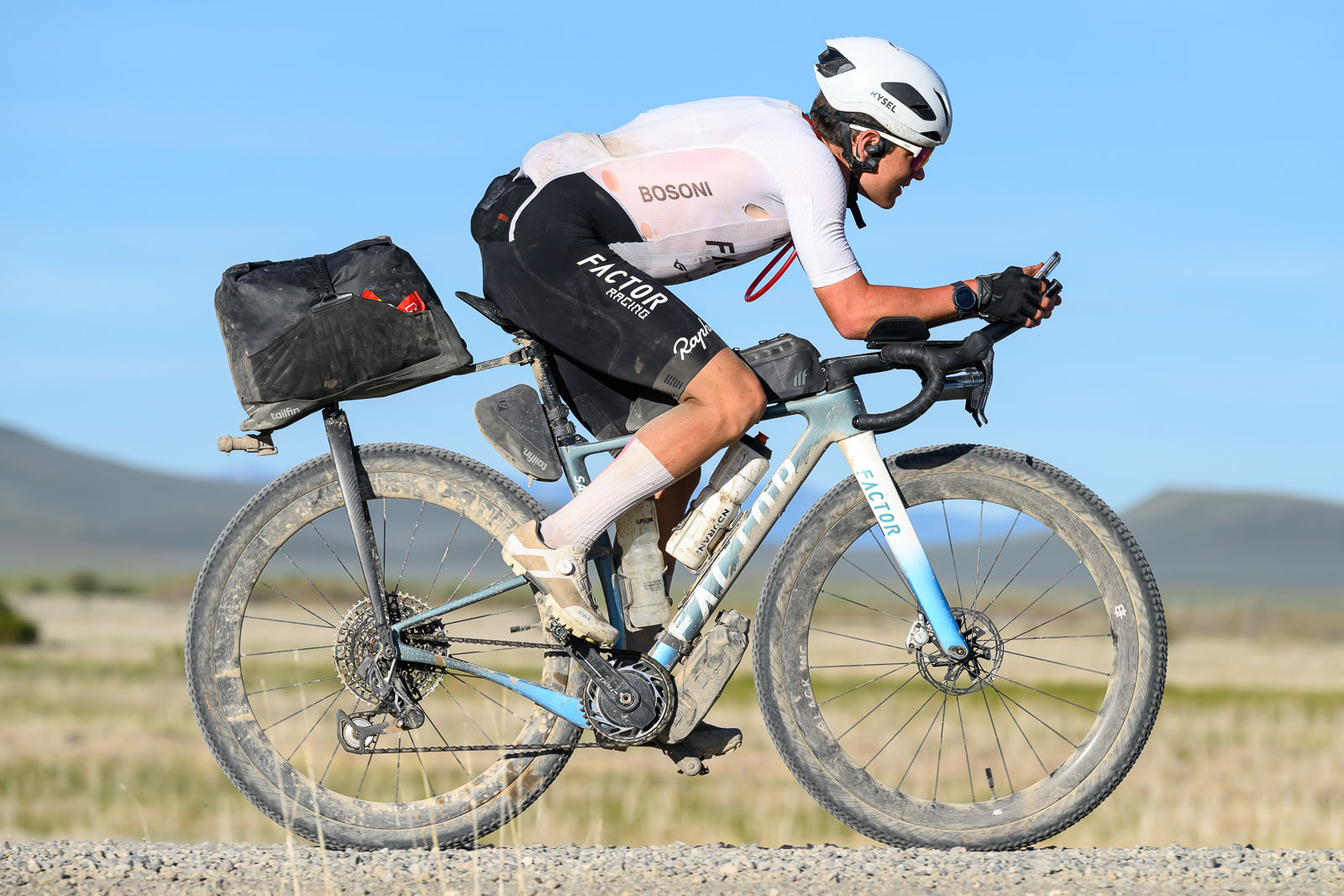
One year after winning The Traka Adventure 560 for the first time, Victor Bosoni returned to Girona with wisdom and respect.
Knowing his competition would not only be stronger and faster, but also ready to anticipate his signature solo moves, Victor further evolved his approach to race preparation, fueling, and recovery. The result? Another victory.
Faster Race, Faster Execution
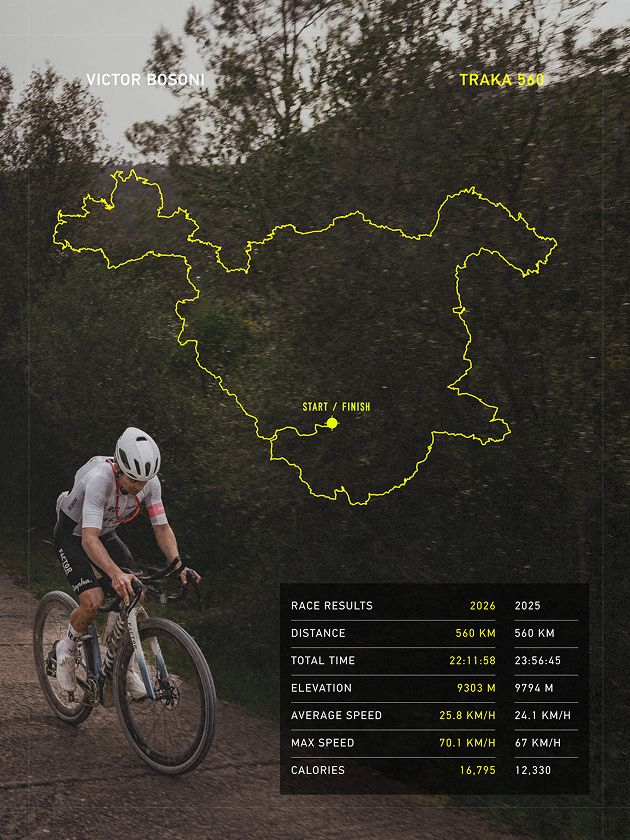
In 2025, Victor covered the 560km course with nearly 10,000 meters of climbing at an average speed of 24.1 km/h. One year later, he raised that number to 25.8 km/h while increasing overall power and maintaining a more aggressive pace from the opening kilometers.
“This year, I knew the level had risen significantly compared to 2025, so I expected the race dynamics to be completely different.”
Unlike the previous edition, where the race settled after a hard opening hour, the 2026 edition exploded immediately. A mechanical issue early in the race cost Victor more than three minutes to the front group, forcing him into a massive effort just to reconnect before the race had fully formed.
“The following climb was ridden at a very high pace by everyone, which completely shattered the field. I had to produce a huge effort right from the beginning just to get back.”
That effort changed the rhythm of his race entirely. Instead of controlling from the front early like in 2025, Victor spent the opening hours racing aggressively to erase mistakes and reposition himself before finally finding space to settle into his own pace.
Building Specifically for Traka
One of the biggest differences between both victories came long before the start line.
In 2025, only ten days separated the Desertus Bikus from Traka. This year, Victor arrived with more than two months between the Atlas Mountain Race and Traka, allowing for proper recovery and more specific preparation.
“We continued building on what had worked in 2025, but what changed the most was the overall approach.”
Instead of massive training volume, the focus shifted toward specificity:
- Long HIIT sessions
- Lactate shuttle work
- Strength training
- General physical preparation
Victor also spent most of his training time on the road rather than gravel.
“Road riding allows you to target specific intensities more precisely thanks to more consistent terrain.”
But gravel sessions still remained essential for maintaining handling skills, confidence, and familiarity with the bike setup.
Becoming an Athlete First
Another major evolution came in the gym.
After the Atlas Mountain Race, Victor and his coach introduced a new strength-training cycle focused less on pure maximal leg strength and more on overall athletic resilience.
“Today, the approach is more global, with the idea of becoming an athlete first rather than just a cyclist.”
For ultra-distance racing, where fatigue impacts the entire body over 20+ hours of racing, that broader physical foundation becomes critical.
“It’s your whole body that’s on the edge and can fail at any moment.”
Victor used the COROS PACE 3 to monitor sleep and training load throughout preparation, syncing data directly with Intervals.icu and his coach.
Fueling for 23 Hours
During a race decided by minutes, minimizing stops became part of the strategy itself.
Victor relied primarily on gels and hydration mix, targeting between 60 and 90 grams of carbohydrates per hour throughout the race. Instead of carrying large amounts of solid food, he started with roughly thirty gels and planned only one meaningful resupply with around 170km remaining.
The key difference this year came from consistency.
Using nutrition alerts on his COROS DURA, Victor received reminders every 25 minutes to fuel.
“Before, I managed nutrition more by feel, and sometimes I would experience bad patches without really understanding why. During this Traka, I never had that happen.”
Even after losing a bottle midway through the race and being forced into additional water stops, his fueling stayed controlled from start to finish.
Equipment That Disappears
Ultra-distance racing often comes down to removing uncertainty.
The reliability of the COROS DURA allowed him to focus entirely on execution instead of equipment management.
“I don’t even think about battery life anymore or whether my computer will last until the end.”
In a race lasting more than 21 hours at race pace, that confidence and lack of stress saves valuable energy.
Small Gains, Big Difference
The numbers show the story of progress. His average speed was faster, his pacing more aggressive, and the overall workload was higher.
Behind that are the details and habits that reveal where the progress came from. Victor practiced more general physical development, while also ensuring that the cycling training he was doing was more specific. On top of that, his refined fueling strategy led to better recovery in training and execution during the race.
Back-to-back victories rarely happen by accident, especially in a world where the competition evolves to match your strengths and take advantage of your weaknesses.
At Traka 560, Victor Bosoni defended his title by evolving the formula required to win it.